Multispectral Extended Depth-of-Field Imaging via Stochastic Wavefront Optimization
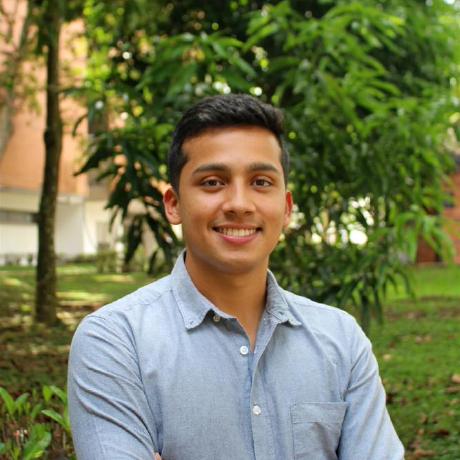
Presenter: Exequiel Oliva (PUCV, Chile)
Abstract
Extended depth-of-field (EDoF) is a desirable attribute for imaging systems where all features in the scene are in focus despite their relative distance. Traditional imaging systems can achieve EDoF by reducing the aperture size at the expense of signal-to-noise ratio, particularly relevant in spectral imaging systems where incoming light is further divided. By designing and integrating diffractive optical elements (DOEs) placed at the aperture plane of the imaging system, wavefront coding has enabled EDoF while maintaining a larger aperture size at the expense of post-processing. Nevertheless, chromatic aberrations may appear and can often be confused with defocus, jeopardizing reconstruction fidelity.
This work presents a novel design approach for a multispectral-aware DOE for EDoF. By considering and modeling a refractive-diffractive optical setup, the proposed system uses a stochastic optimization framework to optimize DOE patterns, simultaneously preserving spectral fidelity and extending the depth of field. The optimization process exploits the covariance matrix adaptation evolution strategy (CMA-ES), efficiently exploring complex, high-dimensional phase configurations without requiring explicit gradient information.
The optimized DOE is evaluated in a simulated imaging pipeline, where the EDoF multispectral datacube is deblurred using Richardson-Lucy deconvolution. Both qualitative and quantitative results demonstrate that the proposed DOE significantly improves depth invariance and spectral fidelity compared to conventional and state-of-the-art DOE designs, offering a cost-effective solution for real-world multispectral EDoF applications.
About the Speaker
Exequiel Oliva is a Ph.D. student at Pontificia Universidad Católica de Valparaíso (PUCV), Chile, visiting GIPSA-lab. This invited seminar marked the beginning of the PICSA research-talk series.
Exequiel Oliva received his B.Sc. degree in 2025 and Engineering Diploma in Electronics Engineering in 2026 from Pontificia Universidad Católica de Valparaíso (PUCV), Chile, where he is currently pursuing his Ph.D. in Electrical Engineering. His research interests include computational imaging, inverse problems, computational and diffractive optics, wavefront coding, multispectral and hyperspectral imaging, and deep learning for image reconstruction. His current research focuses on the joint design of optical elements and computational reconstruction algorithms, particularly using diffractive optical elements for spectral and spatial imaging applications. He is a Student Member of IEEE and OPTICA.